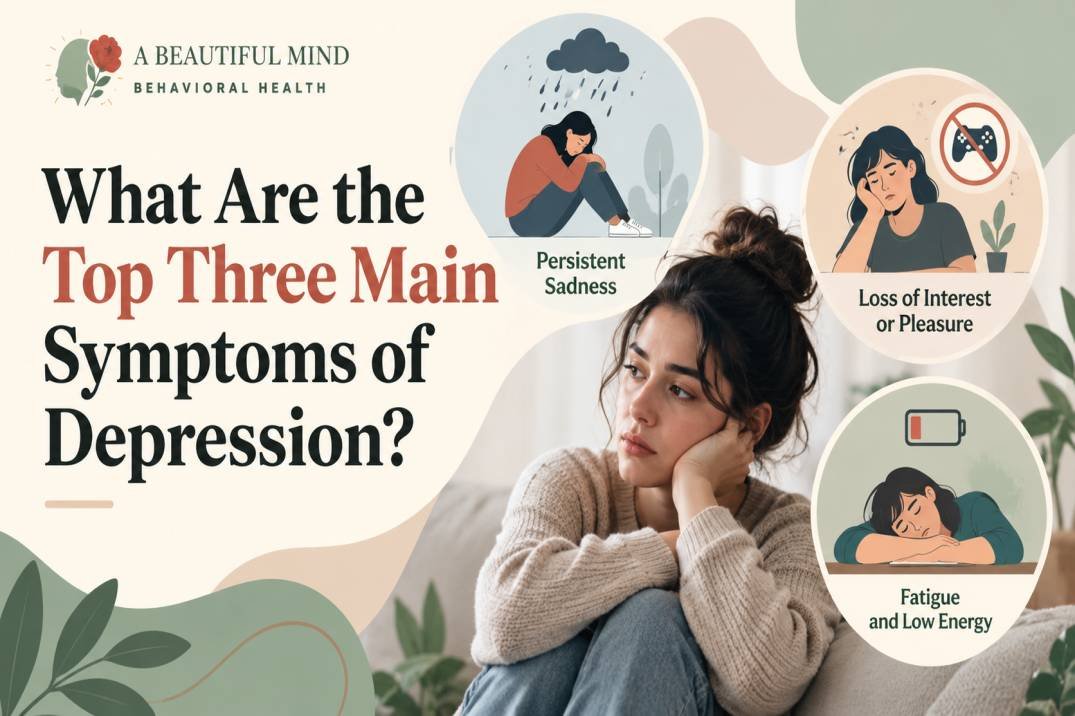
If you’ve ever wondered whether what you’re feeling is “normal” or something more, you’re not alone. The three symptoms doctors point to most often are a low mood that won’t lift, losing interest in things you used to enjoy, and a tiredness that sleep doesn’t fix. Plenty of people have one or two of these now and then. With depression, they stick around and start to run the show.
Depression is not just a long stretch of sadness. It’s a medical condition, and it can seep into your work, your relationships, your body, and the way an ordinary Tuesday feels. Recognizing the Symptoms of Depression won’t provide a diagnosis, but it can help you understand what’s happening, identify possible warning signs, and decide whether it’s time to talk to a mental health professional.
1. A low mood that doesn’t go away
Most people think of this one first. It might feel like sadness, or emptiness, or a kind of gray numbness. Some people get weepy for no reason they can find. Others get snappy and short-tempered and only later realize something deeper is going on.
The key difference from a rough week is how long it lasts. A low mood that hangs around for most of the day, nearly every day, for weeks, is a different thing from being upset about a bad meeting.
Here’s the part people miss: you can look fine. Lots of people with depression still show up to work, laugh at the right moments, and answer texts. They’re just running on fumes behind the scenes. Small problems start to feel huge, and even a short to-do list can feel like too much.
2. Losing interest in things you used to enjoy
Doctors call this anhedonia, which basically means the fun has gone missing.
Think of someone who used to see friends every weekend. First they cancel one plan. Then another. They stop replying as fast. They’d actually like to feel excited, but nothing sparks. Music, hobbies, the gym, even good food can feel flat.
It’s easy to mistake this for laziness. It isn’t. The wanting and the enjoying are the parts that get dimmed, and that’s a recognized piece of depression, not a character flaw.
3. Fatigue that sleep doesn’t fix
Depression isn’t only in your head. It can hit your body hard. Some people sleep eight or nine hours and wake up feeling like they never slept. Getting out of bed takes effort. Cooking, replying to an email, taking a shower, all of it takes longer and costs more.
A quick note: tiredness has lots of causes, including thyroid problems, anemia, sleep disorders, and medication side effects. That’s one reason it’s worth getting checked rather than guessing.
Other signs to watch for
Those three are the headliners, but depression has a long supporting cast:
| Sign | What it can look like |
| Sleep changes | Sleeping far too much, or lying awake for hours |
| Appetite or weight changes | Eating much more or much less than usual |
| Trouble concentrating | Losing your train of thought, struggling to decide things |
| Guilt or worthlessness | Harsh self-criticism that feels hard to turn off |
| Restlessness or slowing down | Feeling keyed up, or moving and speaking more slowly |
| Thoughts of death or suicide | Repeated thoughts about dying or not wanting to be here |
Nobody gets every symptom. The mix is different for everyone, which is partly why depression goes unnoticed for so long.
How is depression actually diagnosed?
For a diagnosis of major depressive disorder, a person generally has at least five symptoms during the same two-week period, and one of them has to be either a depressed mood or a loss of interest or pleasure. The symptoms also have to be a change from how you normally are, and they have to cause real distress or make daily life harder.
That said, you don’t need to hit some magic number before you reach out. If you’re struggling, that’s reason enough.
There’s no blood test or quick online quiz that can confirm depression. A clinician will talk with you about your mood, sleep, appetite, energy, and daily life, and ask about your medical history and any medications. They may also use a questionnaire like the PHQ-9, though a score alone doesn’t settle anything. They’ll often check for physical causes too.
Sadness vs. depression
Everyone feels sad sometimes. Sadness usually has a reason, shifts as time passes, and doesn’t stop you from enjoying other things. Depression tends to stick around for weeks or longer, can show up with no clear trigger, and often drains the joy from lots of areas of life at once. If you’re not sure which one you’re dealing with, that’s a perfectly good reason to ask a professional.
What causes it?
There’s rarely a single cause. Family history, stressful or traumatic experiences, grief, health conditions, poor sleep, hormonal changes, and past episodes of depression can all play a part. Having a risk factor doesn’t mean you’ll become depressed, and plenty of people with none of them do.
What helps
Depression is treatable. Most people do best with one or a mix of these:
- Talk therapy. Cognitive Behavioral Therapy (CBT) is a common choice. It helps you spot unhelpful thought patterns and build different ways of responding.
- Medication. Some people benefit from antidepressants. A prescriber can walk you through the pros, cons, and side effects. It isn’t right for everyone, and that’s okay.
- Daily habits. Regular sleep, real meals, a little movement, time with people you trust, and cutting back on alcohol can help. They support treatment, but they don’t replace it when you need it.
Getting care online
If getting to an appointment feels like one more mountain, telehealth can help. Online visits can include an assessment, medication management, and follow-ups, all from home. At A Beautiful Mind Behavioral Health, adults in California can explore telehealth psychiatric care for depression and other mental health concerns, with a plan built around the individual.
When to reach out
Consider talking to a qualified professional if you’re pulling away from people, struggling at work or home, dealing with ongoing sleep or appetite changes, feeling hopeless, or noticing things getting worse.
If you’re thinking about suicide or can’t keep yourself safe, get help right now. In the U.S., call or text 988 for the Suicide & Crisis Lifeline. If you’re in immediate danger, call 911 or go to the nearest emergency room.
FAQs
Yes. Some people mostly feel numb, irritable, or exhausted.
It can be. Depression can cause insomnia or oversleeping.
Yes, but other conditions can too, so it’s worth getting evaluated.
If it’s lasting, getting in the way of your life, or just feels like too much, that’s enough. You don’t have to wait until it’s severe.
Often, yes. A professional can help you decide if virtual care is a good fit.
The bottom line
A low mood that won’t lift, losing interest in what you love, and exhaustion that sleep can’t touch are three of the most common signs of depression. None of them mean you’re lazy or weak. If this sounds like you, a conversation with a qualified professional is a good next step, and A Beautiful Mind Behavioral Health offers online psychiatric care for adults across California.
Also Read:
Can You Get Depression Medication Online?
Does Online Therapy Work for Depression?
Telehealth Appointment for Depression in California
Online Psychiatrist for Depression in Los Angeles, CA