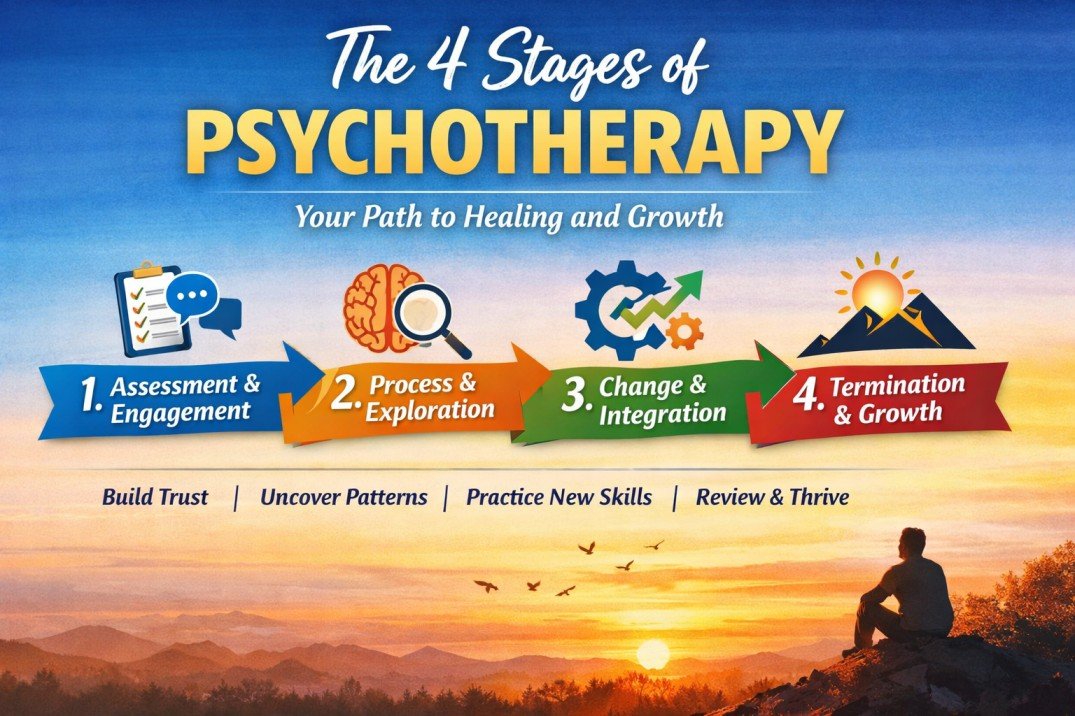
The four stages of psychotherapy are assessment and engagement, process and exploration, change and integration, and termination. You build trust first. You uncover patterns next. You practice new skills after that. You review and end strong. These stages guide you through therapy no matter your issue, from anxiety to trauma. Research from McConnaughy and others backs this structure. It predicts success when you follow the flow.
What Happens in Stage 1: Assessment and Engagement?
You start therapy by building a solid foundation. Your therapist listens to your history. You set clear goals together. You form a trusting alliance. This phase lasts a few sessions. Focus on safety and alignment.
You share what brings you in. Expect questions about your symptoms, past, and expectations. Your therapist explains their approach. You agree on boundaries. This alliance boosts outcomes.
Prepare with these steps. Write down your main concerns. List goals like reducing anxiety. Ask about their methods. You feel safe enough to dive deeper. Without this, later stages stall.
Take Sarah. She entered skeptical about talk therapy. Her therapist clarified CBT basics. They set a goal to manage panic attacks. Trust grew. Sarah opened up. Real work began.
What Happens in Stage 2: Process and Exploration?
You now explore your issues deeply. You identify emotional patterns and triggers. Your therapist helps you connect past to present.
You discuss behaviors and thoughts. Techniques like cognitive restructuring reveal distortions. You spot vicious cycles, such as avoidance fueling anxiety. This uncovers unconscious drivers.
Psychodynamic therapy excels here. You process trauma or family influences. Humanistic approaches build self-awareness. Discomfort arises. You resist at times. Push through. Insight forms.
Daniel traced his anger to childhood criticism. Sessions mapped the pattern. He saw how it sabotaged relationships. Awareness shifted everything.
How Do the Stages Differ Across Therapy Types?
CBT emphasizes skills in the change stage. You log thoughts and challenge them. Psychodynamic digs into patterns during exploration. You uncover hidden motivations. Humanistic focuses on your growth in termination. You claim autonomy.
| Therapy Type | Key Stage Strength |
| CBT | Change: Practical tools |
| Psychodynamic | Process: Root causes |
| Humanistic | Termination: Self-reliance |
Pick based on your needs. CBT suits quick behavior shifts. Psychodynamic fits deep emotional work.
What Happens in Stage 3: Change and Integration?
You implement what you learned. You practice new habits outside sessions. Setbacks happen. You adjust.
You rehearse assertiveness or self-compassion. Build coping skills for stress. Integrate insights into daily life. Therapy feels lighter now.
Marisol practiced boundary-setting after shame work. She said no to draining friends. Confidence grew. Habits stuck.
Use this relapse toolkit. Track triggers daily. Journal wins weekly. Role-play tough talks. You solidify gains.
What Happens in Stage 4: Termination?
You review progress and prepare to end. You celebrate wins. Plan for challenges ahead.
Reflect on changes. Address ending anxiety. Create a maintenance plan. Discuss boosters if needed.
David built a toolkit for anxiety. Mindfulness and journaling became routine. He scheduled a check-in. Independence felt real.
Therapy ends thoughtfully. Abrupt stops risk backslides. You transition with tools in hand.
Common Questions About Psychotherapy Stages
Is therapy always linear? No. You revisit stages. Life events pull you back. Flexibility helps.
How long does each stage last? Engagement takes 1-4 sessions. Exploration and change span months. Termination wraps in 2-4. Your pace varies.
What if I feel stuck? Tell your therapist. Adjust goals. Switch approaches if needed.
How do I know it’s working? You notice less distress. Skills apply easily. You handle triggers better.
You now grasp the full process. Therapy equips you for lasting change. A Beautiful Mind Behavioral Health supports you through every stage with personalized care.