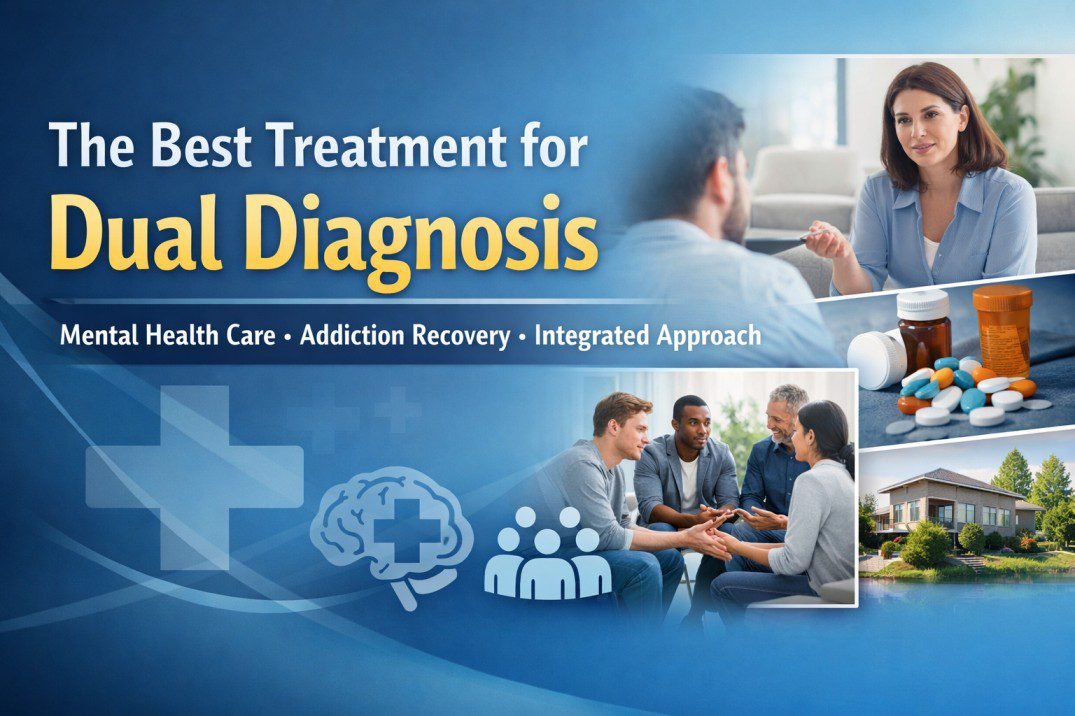
The best treatment for dual diagnosis is integrated treatment, where clinicians treat the mental health disorder and the substance use disorder at the same time. Effective treatment combines psychiatric care, evidence-based therapy, medication management, and structured recovery support. Treating both conditions together improves recovery because mental illness and substance use directly influence each other.
What Is Dual Diagnosis?
Dual diagnosis refers to a situation where you experience both a mental health disorder and a substance use disorder. Mental health conditions such as depression, anxiety, bipolar disorder, or PTSD often occur alongside alcohol or drug misuse.
These conditions interact closely. Some people begin using substances to cope with emotional distress or trauma. Others develop mental health symptoms after prolonged substance use alters brain chemistry. Because the two problems reinforce each other, treating only one condition rarely leads to lasting recovery.
Why Integrated Treatment Works
Integrated treatment addresses both disorders within one coordinated plan. Mental health professionals and addiction specialists work together to evaluate symptoms, develop treatment goals, and monitor progress.
When therapy targets both conditions simultaneously, you learn healthier ways to manage emotional distress without relying on alcohol or drugs. Integrated care also improves medication management and reduces relapse risk.
Core Components of Dual Diagnosis Treatment
Effective treatment includes several clinical steps.
Comprehensive psychiatric evaluation
Clinicians begin with a full mental health and substance use assessment. This process identifies the specific disorders involved and determines how they interact.
Medical detox and stabilization
Some individuals require medical detox before therapy begins. Detox allows the body to safely clear substances while clinicians manage withdrawal symptoms and stabilize physical health.
Evidence-based therapy
Therapy addresses the behavioral and emotional patterns connected to both disorders. Cognitive behavioral therapy helps you identify harmful thinking patterns and develop healthier coping strategies. Dialectical behavior therapy teaches emotional regulation and distress tolerance. Contingency management reinforces recovery behaviors by rewarding progress such as maintaining sobriety.
Medication management
Psychiatrists may prescribe medications to stabilize depression, anxiety, or mood disorders. Certain medications also reduce cravings and withdrawal symptoms associated with addiction.
Peer support and recovery programs
Group therapy and recovery communities provide accountability and connection. Support programs reduce isolation and help maintain long-term recovery.
Levels of Care
Dual diagnosis treatment occurs in different settings depending on symptom severity.
Inpatient rehabilitation provides continuous supervision, medical care, and intensive therapy. Intensive outpatient programs offer structured treatment while allowing you to live at home. Standard outpatient treatment includes regular therapy sessions and medication monitoring for individuals with stable living conditions.
Long-Term Recovery
Recovery from dual diagnosis requires ongoing care. Continued therapy, medication monitoring, and supportive relationships help maintain stability. Healthy routines such as consistent sleep, regular exercise, and stress management strengthen mental health and reduce relapse risk.
Frequently Asked Questions
Can dual diagnosis be treated successfully?
Yes. When clinicians treat mental health conditions and substance use disorders together through integrated care, recovery outcomes improve significantly. Many people achieve long-term stability with consistent treatment and support.
What therapies are most effective for dual diagnosis?
Cognitive behavioral therapy and dialectical behavior therapy are widely used because they address both addiction triggers and emotional regulation problems. These therapies teach practical coping strategies that reduce relapse risk.
How long does dual diagnosis treatment take?
Initial stabilization may take several weeks, but full recovery usually requires several months or longer. Ongoing therapy and support often continue after the primary treatment phase.
Is inpatient treatment necessary for dual diagnosis?
Inpatient treatment is recommended for severe addiction, medical risks during withdrawal, or unstable mental health symptoms. Individuals with moderate symptoms may recover successfully through structured outpatient programs.
Can outpatient treatment work for dual diagnosis?
Yes. Intensive outpatient or standard outpatient treatment can work well when you have a stable home environment and consistent access to therapy and psychiatric care.
Conclusion
The most effective treatment for dual diagnosis is integrated care that treats mental health disorders and substance use disorders at the same time. A combination of psychiatric evaluation, therapy, medication management, and long-term support helps you manage symptoms, maintain sobriety, and rebuild a stable and healthy life.
If you or a loved one is struggling with co-occurring mental health and substance use disorders, A Beautiful Mind Behavioral Health provides professional evaluation and personalized treatment plans designed to address both conditions together. Their clinical team focuses on evidence-based care that supports long-term recovery, emotional stability, and healthier daily functioning.