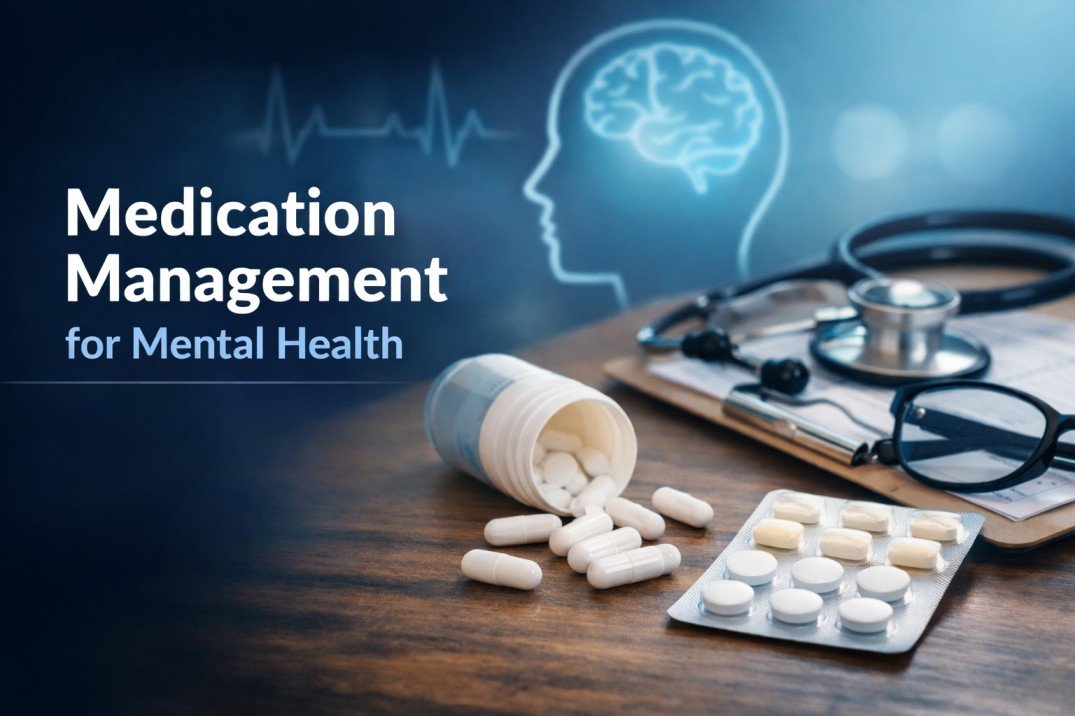
Medication management is a structured mental health service led by a licensed medical provider. The provider assesses your symptoms, confirms diagnoses, selects appropriate medication, monitors response, and makes adjustments based on how your body and brain respond.
Mental health medications management affect neurotransmitters such as serotonin, dopamine, norepinephrine, GABA, and glutamate. These chemical systems regulate mood, attention, sleep, motivation, and emotional regulation. Because every nervous system responds differently, medication requires careful observation and individualized dosing.
Medication management exists to ensure:
- You receive the right medication
- At the right dose
- For the right condition
- With ongoing safety monitoring
Without proper management, even effective medications can cause unnecessary side effects or fail to provide benefit.
How Medication Management Works in Mental Health Care
Medication management follows a continuous clinical cycle.
Your provider evaluates your symptoms and medical history. They choose a medication based on evidence, your diagnosis, previous responses, and potential interactions. They monitor your response. They adjust the plan when needed.
This cycle repeats until you achieve stable improvement with tolerable side effects.
Psychiatric medication rarely works perfectly on the first attempt. Adjustment is expected. Ongoing management prevents premature discontinuation and unsafe dose changes.
Who Provides Medication Management?
Psychiatrists and psychiatric nurse practitioners primarily provide medication management. These clinicians receive specialized training in diagnosing mental health conditions and prescribing psychotropic medications.
Primary care physicians may prescribe some psychiatric medications, but they usually do not offer the depth of monitoring required for complex or treatment resistant conditions.
Mental health specialization matters because:
- Many psychiatric medications share overlapping side effects
- Symptoms often overlap across diagnoses
- Coexisting conditions are common
- Subtle changes in dosing can significantly affect outcomes
Key Components of Effective Medication Management
Comprehensive Psychiatric Evaluation
Your provider gathers detailed information about your symptoms, duration, severity, medical history, family history, trauma exposure, sleep patterns, substance use, and previous medication trials.
This evaluation forms the foundation of safe prescribing.
Medication Selection and Treatment Planning
Providers match medication classes to symptom patterns. For example, selective serotonin reuptake inhibitors commonly treat anxiety and depression. Stimulants or non stimulant options treat ADHD. Mood stabilizers treat bipolar disorder.
The plan considers:
- Expected benefits
- Common side effects
- Medical risks
- Lifestyle factors
- Your preferences
Medication Reconciliation
Your provider reviews all prescriptions, over the counter drugs, supplements, and herbal products. Many interactions occur outside psychiatric medications alone.
Safety and Interaction Monitoring
Providers monitor for blood pressure changes, weight shifts, sleep disruption, metabolic effects, movement symptoms, cardiac risks, and rare adverse reactions.
Some medications require periodic lab testing.
Side Effect Management
Side effects do not automatically mean failure. Providers may adjust dose, change timing, switch medications, or add supportive strategies to reduce discomfort.
Follow Up and Dose Adjustments
Your provider evaluates response using symptom changes and functional improvement. Doses change gradually based on tolerance and benefit.
Deprescribing When Appropriate
Medication management includes reducing or stopping medications that no longer provide benefit or cause harm. Stopping psychiatric medication requires gradual tapering to avoid withdrawal effects.
What Conditions Can Medication Management Treat?
Medication management commonly treats:
- Anxiety disorders
- Major depressive disorder and persistent depressive disorder
- Bipolar disorder
- Attention deficit hyperactivity disorder
- Post traumatic stress disorder
- Obsessive compulsive disorder
- Panic disorder
- Sleep disorders
- Mood disorders
Medication does not cure these conditions. It reduces symptom burden and improves functioning.
What Happens During a Medication Management Appointment?
First Appointment
You discuss symptoms, goals, history, and previous treatments. The provider explains diagnostic impressions and medication options. You review risks and benefits before starting treatment.
Ongoing Visits
You review symptom changes, side effects, sleep, appetite, energy, focus, and mood. The provider adjusts the plan as needed.
Visits typically last 20 to 45 minutes depending on complexity.
How Often Are Medication Management Visits Scheduled?
Early treatment often requires visits every two to four weeks. Once stable, visits commonly occur every one to three months. Long term maintenance may require two to four visits per year.
Frequency depends on symptom severity and medication type.
Why Medication Management Is Important
Medication management:
- Reduces medication errors
- Improves symptom control
- Detects side effects early
- Prevents unsafe combinations
- Supports consistent adherence
- Reduces hospitalizations
- Improves daily functioning
Poorly monitored medication increases risk without improving outcomes.
Medication Management vs Therapy
Medication targets brain chemistry. Therapy targets thoughts, behaviors, emotions, and coping skills.
Medication can reduce symptom intensity. Therapy teaches you how to manage stressors, triggers, and patterns.
Many people benefit from combining both. Some conditions respond well to therapy alone. Others require medication. Your provider helps determine the appropriate balance.
Who Should Consider Medication Management?
You should consider medication management if you:
- Take multiple psychiatric medications
- Have ongoing symptoms despite treatment
- Experience problematic side effects
- Have a new diagnosis
- Were recently hospitalized
- Struggle with consistency
- Have coexisting mental health conditions
Tools and Strategies Used in Medication Management
Providers may recommend:
- Written medication lists
- Pill organizers
- Refill synchronization
- Reminder applications
- Symptom tracking logs
These tools improve safety and adherence.
Telehealth Medication Management
Telehealth allows medication management through secure video visits. Providers can evaluate symptoms, prescribe electronically, and monitor response.
Telehealth works well for most stable outpatient conditions. Some controlled medications or complex cases require in person visits depending on regulations.
Safety, Risks, and Side Effects
All psychiatric medications carry potential risks. Most side effects are dose related and reversible.
Contact your provider if you experience:
- Severe agitation
- New suicidal thoughts
- Allergic reactions
- Fainting
- Uncontrolled movements
- Confusion
Do not stop medication abruptly unless instructed.
Questions to Ask Your Medication Management Provider
- What benefits should I expect
- What side effects are common
- How long before improvement
- What alternatives exist
- How long might I need this medication
- What monitoring is required
Clear communication improves outcomes.
How to Choose the Right Medication Management Provider
Look for:
- Licensed psychiatric credentials
- Experience with your condition
- Clear explanations
- Collaborative decision making
- Willingness to adjust treatment
How to Get Started
Schedule a psychiatric evaluation. Bring your medication list, medical history, and previous treatment records. Be honest about symptoms and concerns.
Frequently Asked Questions
How long does medication take to work?
Many antidepressants and anxiety medications require two to six weeks. Stimulants act within hours.
Will I need medication forever?
Some people use medication short term. Others benefit long term. The decision depends on symptoms and recurrence risk.
Can I stop medication once I feel better?
Stopping requires medical guidance and gradual tapering.
What if I do not like how I feel?
Tell your provider. Adjustments are part of treatment.
Will medication change my personality?
Appropriate medication reduces symptoms. It does not alter your core identity.
Conclusion
Medication management provides structured medical oversight to ensure your psychiatric medications remain safe, effective, and properly adjusted over time. With careful evaluation and ongoing monitoring, A Beautiful Mind Behavioral Health supports stability, symptom relief, and personalized mental health care designed around your unique needs.