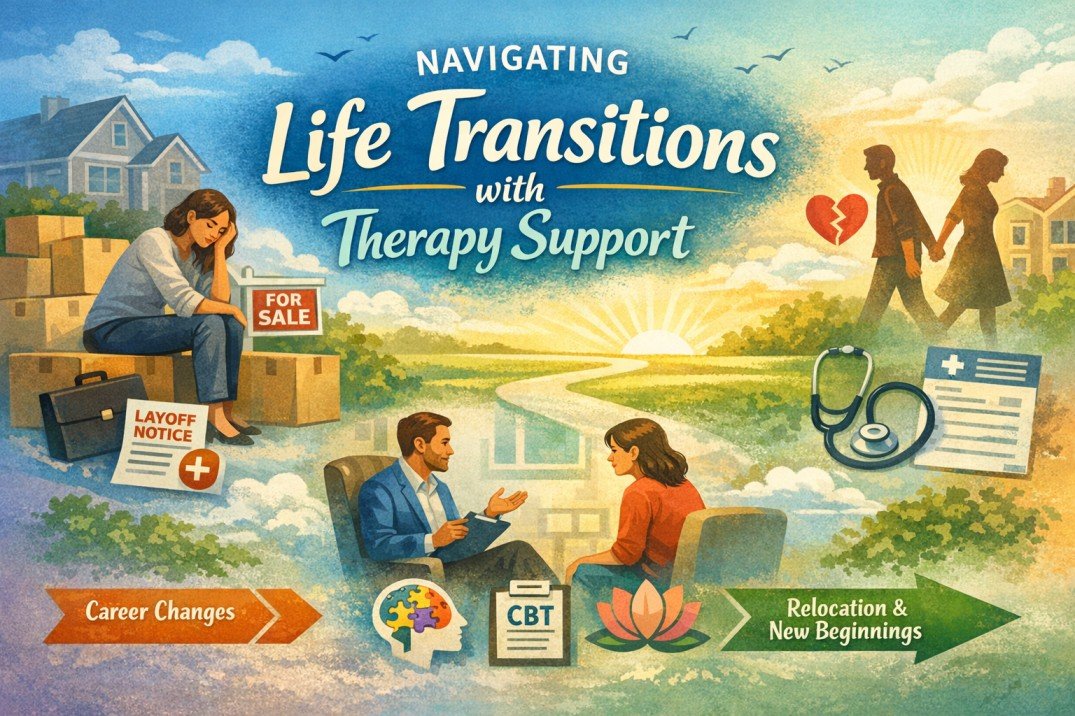
Life transitions in therapy mean professional support to handle major life shifts like career changes, divorce, or relocation. You process emotions, build coping skills, and find purpose through methods like Cognitive Behavioral Therapy (CBT). Therapy cuts anxiety by up to 50 percent in these periods and helps you adapt faster than self-help alone.
Also Read: Support for Life Transitions
What Are Life Transitions?
You face life transitions when big changes disrupt your routines and sense of self. These include predictable events like retirement or graduation and unexpected ones like job loss or illness. They trigger stress, grief, or anxiety because they force you to rebuild identity.
Career shifts challenge your worth. Layoffs strip security. Divorce ends shared histories. Parenthood is overwhelming with duties. Relocation cuts social ties.
| Category | Examples | Emotional Impact |
| Career | Job loss, promotion | Anxiety, doubt |
| Relationships | Divorce, empty nest | Grief, loneliness |
| Family/Health | Parenthood, diagnosis | Overwhelm, fear |
Therapy validates these reactions and equips you to reframe them.
Why Choose Therapy Over Self-Help?
Self-help like journaling or exercise helps mildly. Therapy provides structure that beats it for deep change. CBT spots distorted thoughts such as “I will never recover.” You challenge evidence and replace them. Studies confirm 50 percent anxiety drops in 8 to 12 weeks.
Mindfulness calms briefly. Acceptance and Commitment Therapy (ACT) aligns actions with your values for lasting flexibility. Friends reassure me. Therapists track progress without bias.
| Self-Help | Therapy Advantages |
| Journaling | CBT reframes thoughts |
| Support networks | ACT builds values alignment |
| Routines | Measurable resilience gains |
From my work at Psychological Associates of Melbourne, clients relocated for jobs. Self-care stalled them. Sessions uncovered root fears. They rebuilt confidence in three months.
Top Therapy Types for Transitions
CBT leads. You track thoughts in homework like thought records. Reframe “This ruins me” with facts. Sessions last 45 minutes weekly.
ACT helps acceptance. Clarify values, say family first. Take small aligned steps. Interpersonal Therapy hones communication for relationships.
| Type | Focus | Techniques | Duration |
| CBT | Thoughts | Reframing | 8-12 weeks |
| ACT | Acceptance | Values work | 10 weeks |
| Interpersonal | Relationships | Skill practice | 12 weeks |
Download a free CBT thought record. List situation, thought, evidence for and against, balanced view.
Actionable Coping Strategies
Validate emotions first. Do five-minute mindfulness daily. Journal: “What scares me most?”
Build hybrid support. Use friends for help. Match with a transition therapist.
Track CBT thoughts weekly. Set 30-day goals. Week one: Update resume. Log sleep and meals for steady energy.
- Mindfulness plus journal.
- Friends and therapist.
- CBT tracking.
- Micro-goals.
- Self-care metrics.
These blend routines with therapy depth.
Signs to Start Therapy
Seek help if sadness persists two weeks. Note isolation or paralysis.
Frequently Asked Questions
What is it?
Support for shifts like divorce. Process grief, build skills.
CBT benefits?
Cuts anxiety by targeting thoughts. Results in weeks.
Therapy vs. coaching?
Therapy handles emotions. Coaching sets goals.
Conclusion
Therapy equips you to handle any life transition with proven tools and clarity. You emerge stronger, aligned with your values, and ready for what comes next. At A Beautiful Mind Behavioral Health, our specialists guide you through these changes with personalized CBT, ACT, and support strategies. Book your consult today to start building resilience.