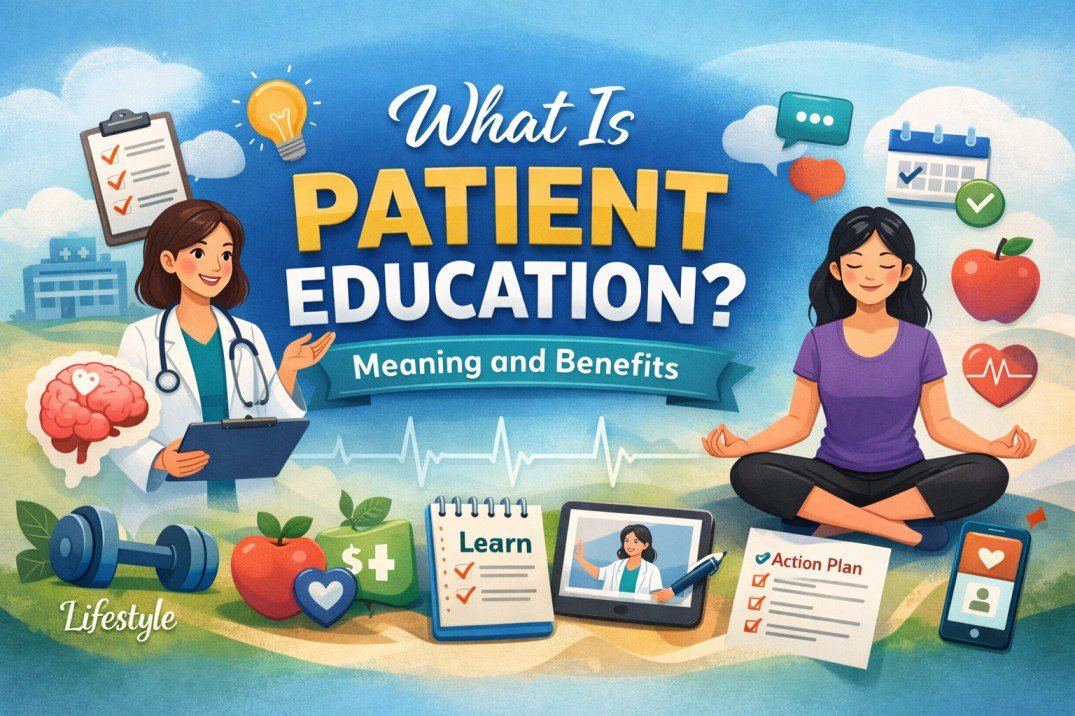
Patient education is a structured, interactive learning process where a healthcare professional provides you with knowledge, practical skills, and guidance so you can understand your condition, make informed decisions, and manage your health effectively. It includes learning about diagnosis, treatment options, medications, lifestyle changes, and self-management tools. In mental health care, patient education helps you understand emotional patterns, identify triggers, and develop coping strategies that support daily stability.
This process focuses on clear explanations and practical tools you can apply in real situations. Instead of passively receiving treatment, you become actively involved in your care. A healthcare provider explains how your condition works, what influences symptoms, and what actions improve stability. When you understand these connections, education supports behavior change, improves decision making, and helps you manage symptoms more effectively.
Purpose of Patient Education
Patient education improves health outcomes by helping you understand and manage your condition. When you recognize what affects your symptoms, you can respond earlier and prevent escalation. Education promotes self management by teaching you how to monitor changes and apply coping strategies independently.
It also increases treatment adherence. When you understand why therapy approaches or medications are recommended, you are more likely to follow them consistently. Patient education reduces complications by encouraging early action and informed decision making. This approach supports long term stability and overall well-being.
Why Patient Education Is Important
Patient education builds trust between you and your healthcare provider. Clear explanations reduce confusion and help you feel informed about your care. This transparency improves engagement and long term participation in treatment.
It encourages healthy behavior change by showing how daily habits affect mental health. Understanding sleep, stress, and emotional triggers allows you to make consistent improvements. Education also improves understanding of conditions, which reduces fear and uncertainty. When you recognize warning signs early, you can prevent long term complications and maintain stability.
Also Read: Stages and Phases of Psychotherapy
What Does Patient Education Include?
Patient education includes understanding your diagnosis and how symptoms affect your thoughts, emotions, and behavior. You learn treatment options such as therapy, medication, or combined approaches. Medication education explains benefits, expected effects, and safety considerations.
Lifestyle changes are also part of patient education. You learn how sleep quality, nutrition, stress levels, and physical activity influence mental health. Symptom monitoring helps you recognize early warning signs. You also learn when to seek support and how to prevent symptoms from worsening.
Also Read: What Are the 4 Stages of Psychotherapy?
Key Components of Patient Education Process
Assessment of Learning Needs
Patient education begins by identifying what you need to learn. Some people need help understanding symptoms, while others need coping strategies or lifestyle guidance. Education becomes more effective when it matches your situation.
Planning Educational Support
Information is organized in a clear and manageable way. The focus remains on practical steps that you can apply immediately.
Implementation of Education
You receive explanations, examples, and structured tools. You begin applying coping strategies, tracking symptoms, and adjusting daily habits.
Evaluation and Understanding
Your understanding is reviewed through discussion and feedback. This helps identify what is working and what needs adjustment.
Ongoing Education and Follow Up
Patient education continues over time. As your needs change, new tools and strategies are introduced to support long term progress.
Also Read: What Is a Screening Assessment?
Methods Used in Patient Education
Patient education uses multiple methods to improve understanding. Verbal education provides clear explanations during sessions. Written materials allow you to review information later. Visual guides help explain emotional patterns and triggers. Digital tools support symptom tracking and progress monitoring.
Demonstrations show how to apply coping strategies effectively. Interactive learning allows you to practice techniques in real situations. This approach improves retention and encourages consistent use.
Patient Education & Self Help Tools for Mental Health
Mood Tracking Tools
Mood tracking helps you identify emotional patterns, triggers, and progress over time. This improves awareness and supports early intervention.
Journaling Exercises
Journaling helps you process thoughts, understand behavior patterns, and improve emotional clarity.
Guided Mindfulness Techniques
Mindfulness techniques reduce stress and improve emotional regulation. These exercises help you stay present and manage reactions.
Self Care Plans
Self care plans organize habits such as sleep, nutrition, and daily routines. Consistency supports mental stability.
Coping Skills Strategies
Coping strategies provide structured steps for managing anxiety, depression, and stress in daily life.
Benefits of Patient Education
Patient education increases confidence because you understand your condition and know how to respond. It improves treatment adherence by clarifying the purpose of recommendations. It supports better mental health outcomes through early awareness and consistent management.
It reduces relapse risk by helping you recognize warning signs. It improves communication with your provider because you can describe symptoms clearly. It also increases self awareness, allowing you to manage emotions and behavior more effectively.
How Patient Education Improves Mental Health
Patient education improves emotional awareness. You begin recognizing patterns and triggers. It supports stress management by teaching practical coping tools. Daily strategies help you manage symptoms outside sessions.
Education also encourages lifestyle improvements such as better sleep and structured routines. It supports therapy progress by reinforcing skills between appointments. These changes create long term stability.
Building Better Habits Through Patient Education
Patient education explains how habits influence mental health. Sleep affects emotional regulation and concentration. Improving sleep often stabilizes mood. Nutrition influences energy and focus, while balanced meals support mental clarity.
Stress reduction techniques help manage daily pressure. Exercise improves mood and reduces tension. Building consistent routines creates predictability and reduces overwhelm. These changes support long term mental wellness.
Who Can Benefit from Patient Education?
Patient education benefits individuals experiencing anxiety, depression, ADHD, and stress. It also helps people navigating life transitions such as career changes, relationship challenges, and burnout.
Anyone who wants to understand emotional patterns and improve coping skills can benefit. Education supports both mild concerns and ongoing mental health conditions.
What Makes Patient Education Effective?
Effective patient education is personalized. It considers your symptoms, goals, and learning style. It uses clear language that is easy to understand. Cultural background and literacy level are also considered to improve comprehension.
Ongoing education ensures learning continues as needs change. Practical tools help translate knowledge into action. This combination improves outcomes.
Patient Education vs Self Help
Self help resources provide general information. Patient education provides structured guidance tailored to your needs. With professional support, you use strategies that match your condition. This structured learning improves outcomes and reduces trial and error.
FAQ
Patient education is the process of teaching you about your health, treatment options, and coping strategies so you can manage symptoms effectively.
It improves understanding, supports treatment adherence, and helps you manage mental health more confidently.
It includes diagnosis education, treatment options, medication information, lifestyle changes, and coping tools.
Common tools include mood tracking, journaling, mindfulness exercises, self care plans, and coping strategies.
It improves awareness, builds coping skills, and supports long term emotional stability.
Mental health professionals such as therapists, psychologists, and psychiatric providers provide patient education.
Examples include learning about diagnosis, tracking mood, practicing mindfulness, and building structured routines.
Yes. It improves outcomes by helping you understand and manage your condition consistently.
Conclusion
Patient education helps you understand your mental health, develop practical skills, and take an active role in your care. With clear guidance, structured tools, and ongoing support, you can manage symptoms more effectively and build habits that support long term well-being. At A Beautiful Mind Behavioral Health, patient education focuses on empowering you with knowledge, practical strategies, and personalized support so you can make informed decisions and maintain emotional stability over time.